

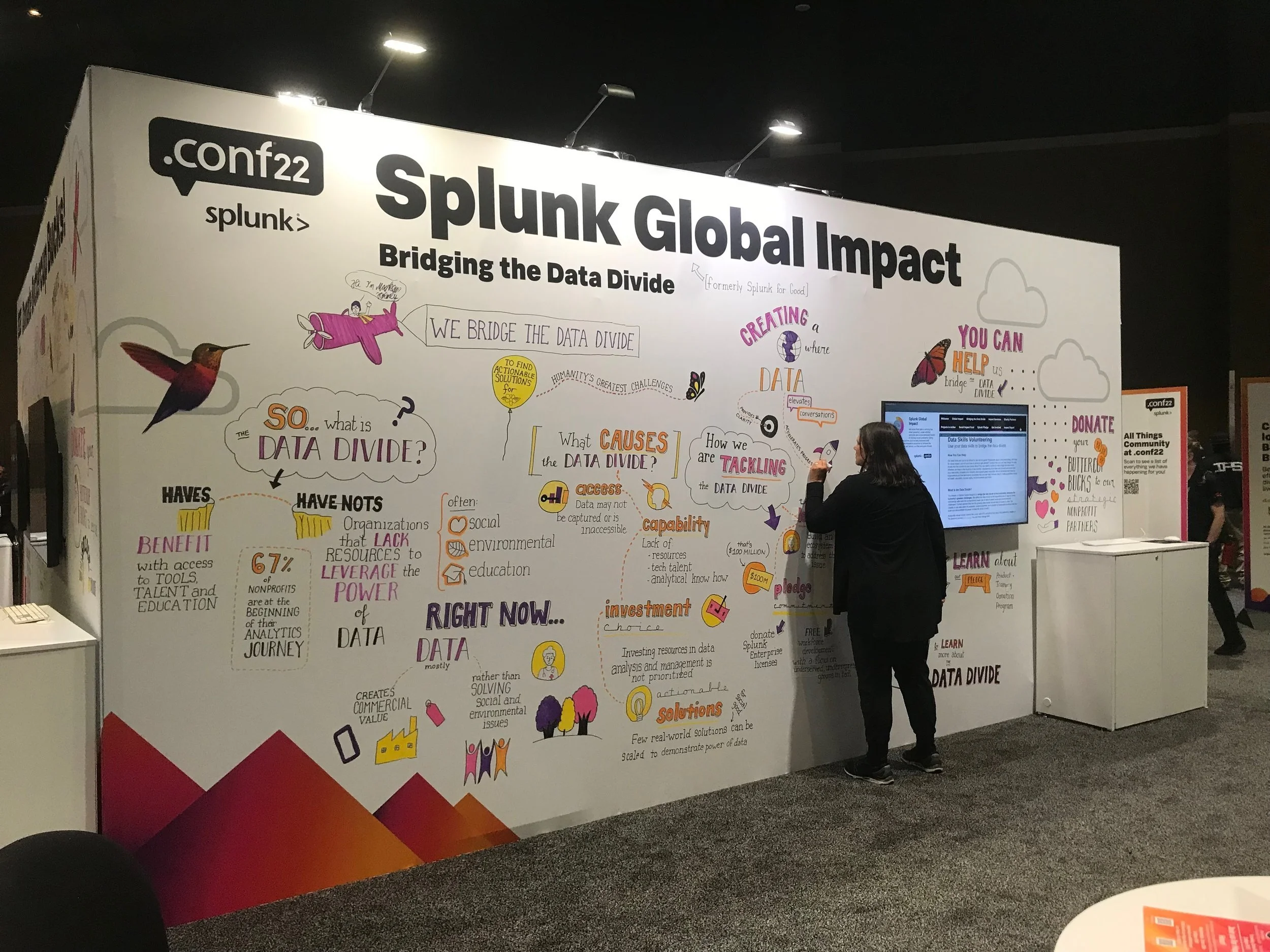
These terms get tossed around like they mean the same thing—but they don’t. (And yes, others may use the phrases differently.) They are, however, all members of the same family—live visual thinking. Each one plays a different role in the room.
Let’s break it down.
Graphic Recording - Making Ideas Visible
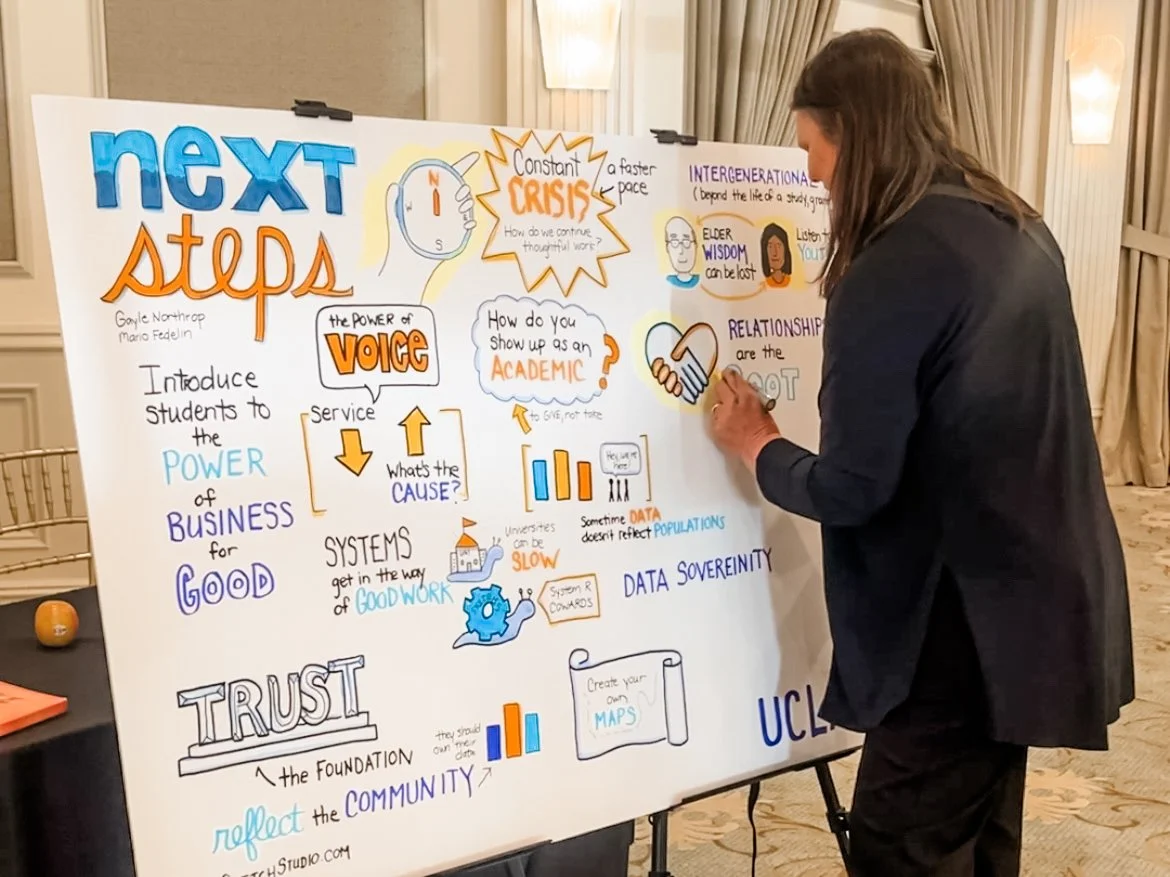
Let’s say you’re at your professional organization’s annual conference, and the keynote is on fire. Ideas are flying, people are nodding, and phones are mostly down.
Then you glance to the side. There’s a human standing at a massive board, drawing fast. And somehow, they’re translating everything the speaker is saying into words and images in real time.
It feels a little like magic. This is graphic recording. It’s the art of listening deeply and turning ideas into visuals as they happen. Not later—live.
The result? A visual map of the talk that lets people see what was said at a glance.
People don’t rally around paragraphs. They rally around pictures.
Graphic Facilitation - Shaping Ideas Visually
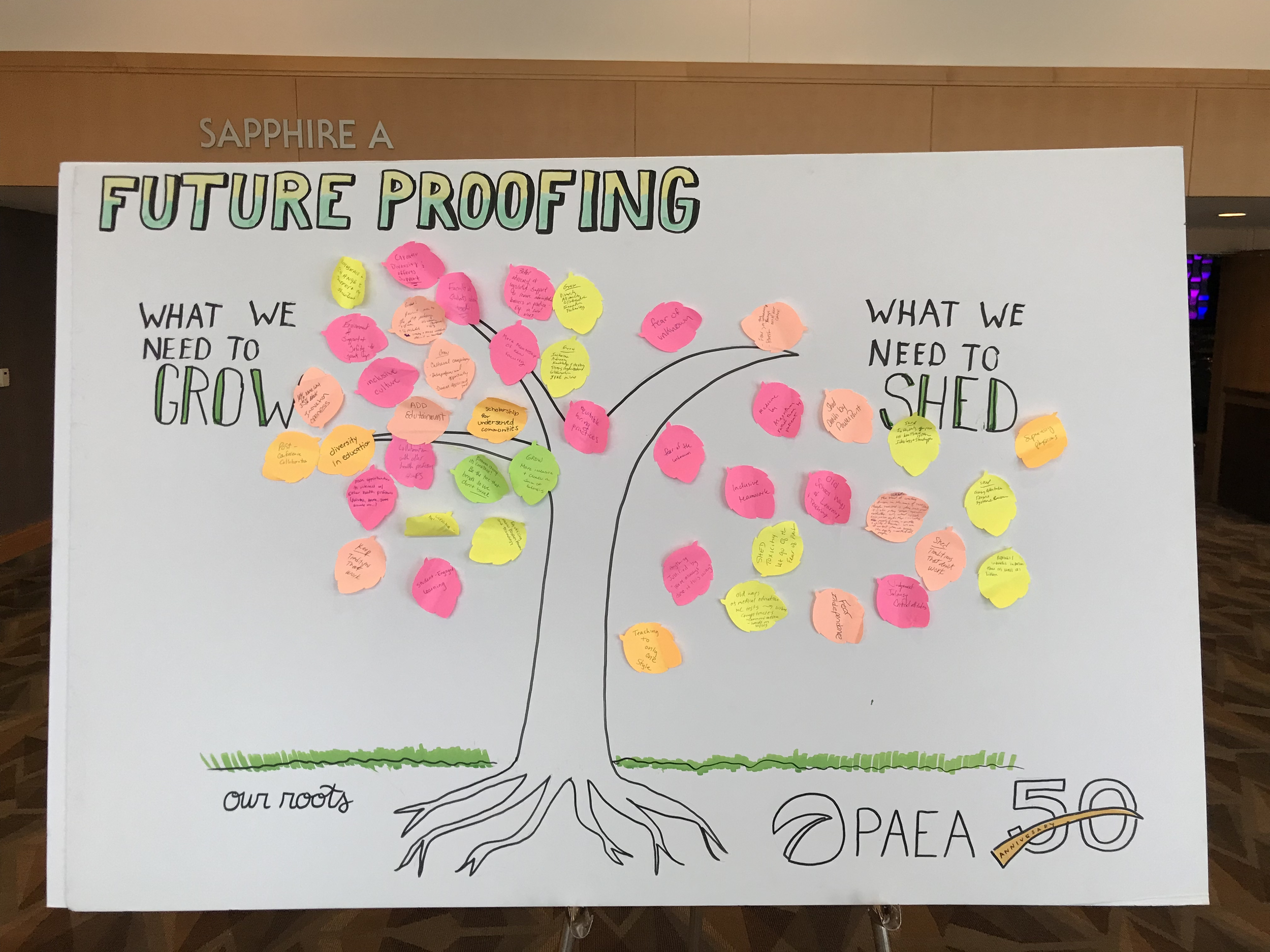
This isn’t a keynote. It’s a working strategy session—a room full of smart people trying to figure something out.
Instead of just capturing ideas, graphic facilitation helps shape them.
It uses visuals, templates, diagrams, and frameworks to guide a conversation toward a goal. This is working art. And because conversations are messy, the visuals can be messy—but very effective.
Sometimes the facilitator is also the one drawing. Sometimes it’s a tag team—one guiding, one visualizing.
These sessions are usually private, and the drawings can be a little raw. But they create a shared picture of what was said—and where the team is going.
This is where alignment begins.
Sketchnotes - Sharing Ideas
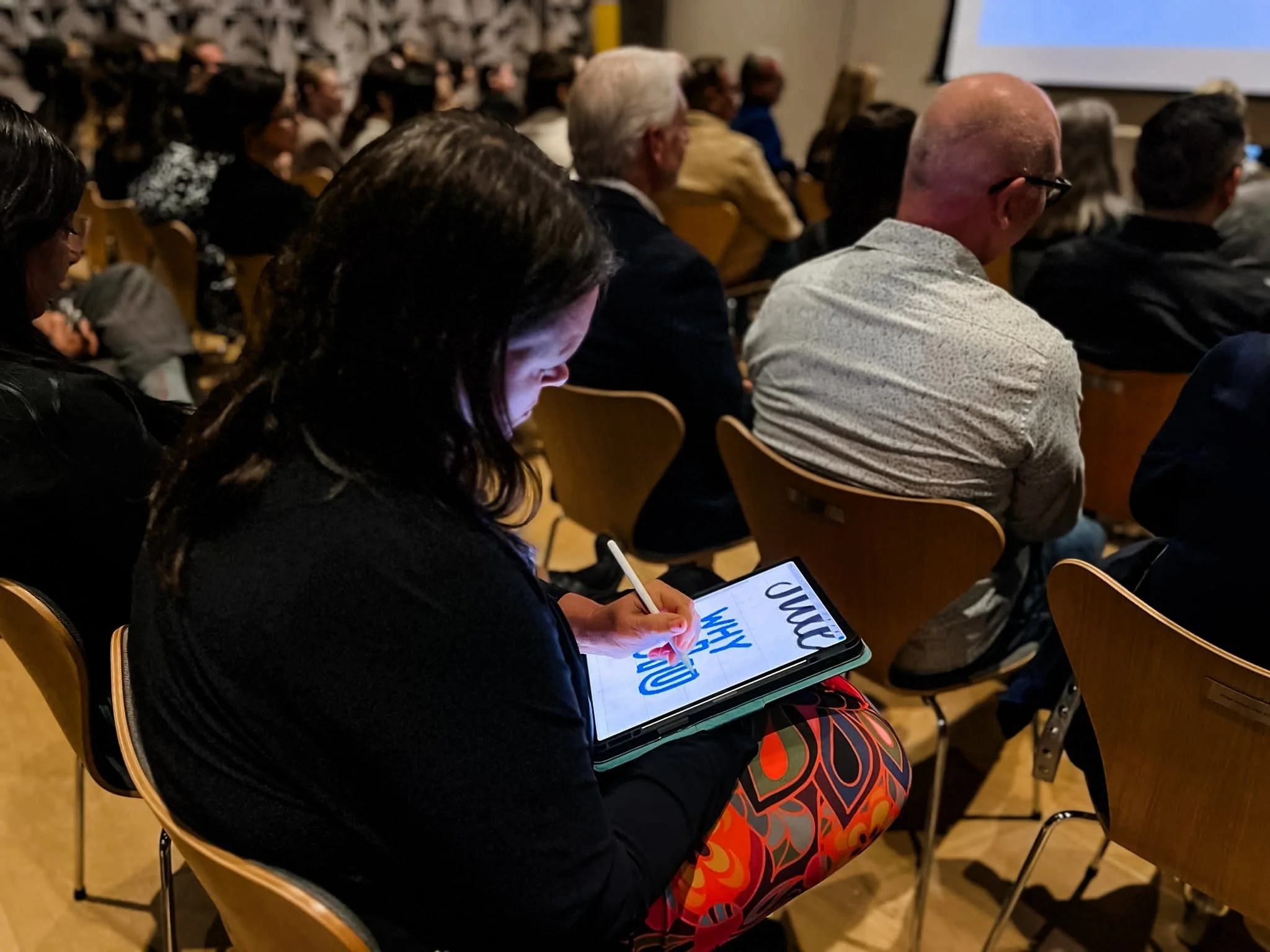
Now we’re back in the audience at that same keynote, with the same ideas flying.
But this time, the artist isn’t at the front of the room. They’re sitting in a chair, sketchbook (or iPad) in hand, capturing the talk for themselves—or for their audience.
That’s sketchnoting. It’s a more personal, portable version of visual note-taking in a smaller format.
Instead of a six-foot board, it lives on a page.
And afterward, those notes can be shared—on LinkedIn, in a recap, in a “here’s what mattered” moment.
So what’s the difference?
Graphic Recording = capturing ideas live, large-scale, for a group
Graphic Facilitation = guiding conversations using visuals to reach a goal
Sketchnotes = personal, portable visual notes from a talk or session
Same root skill. Different job in the room. Of course, there is also digital graphic recording and virtual graphic facilitation but the concept behind each is the same.
If you want help capturing or shaping your ideas, let’s talk.