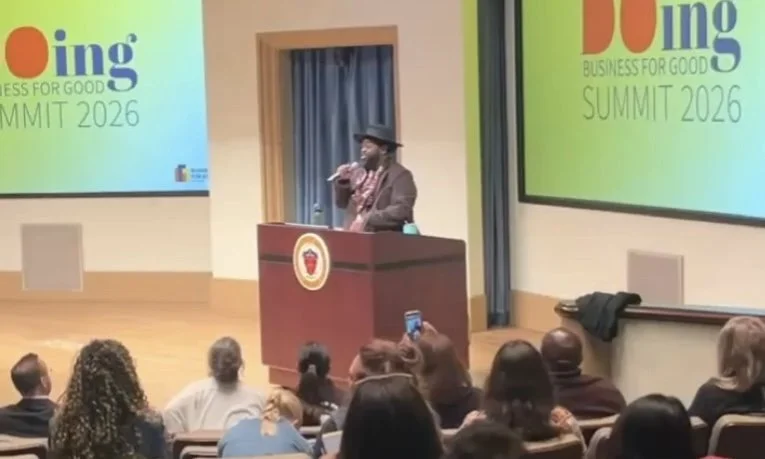
Your favorite San Diego graphic recorder attended her first Business for Good San Diego Summit this week. The premise behind the organization is simple—but powerful: business can be a force for good in society, but only if it’s designed that way. That idea ran like a thread through the entire summit.
Here are a few insights that stuck with me.
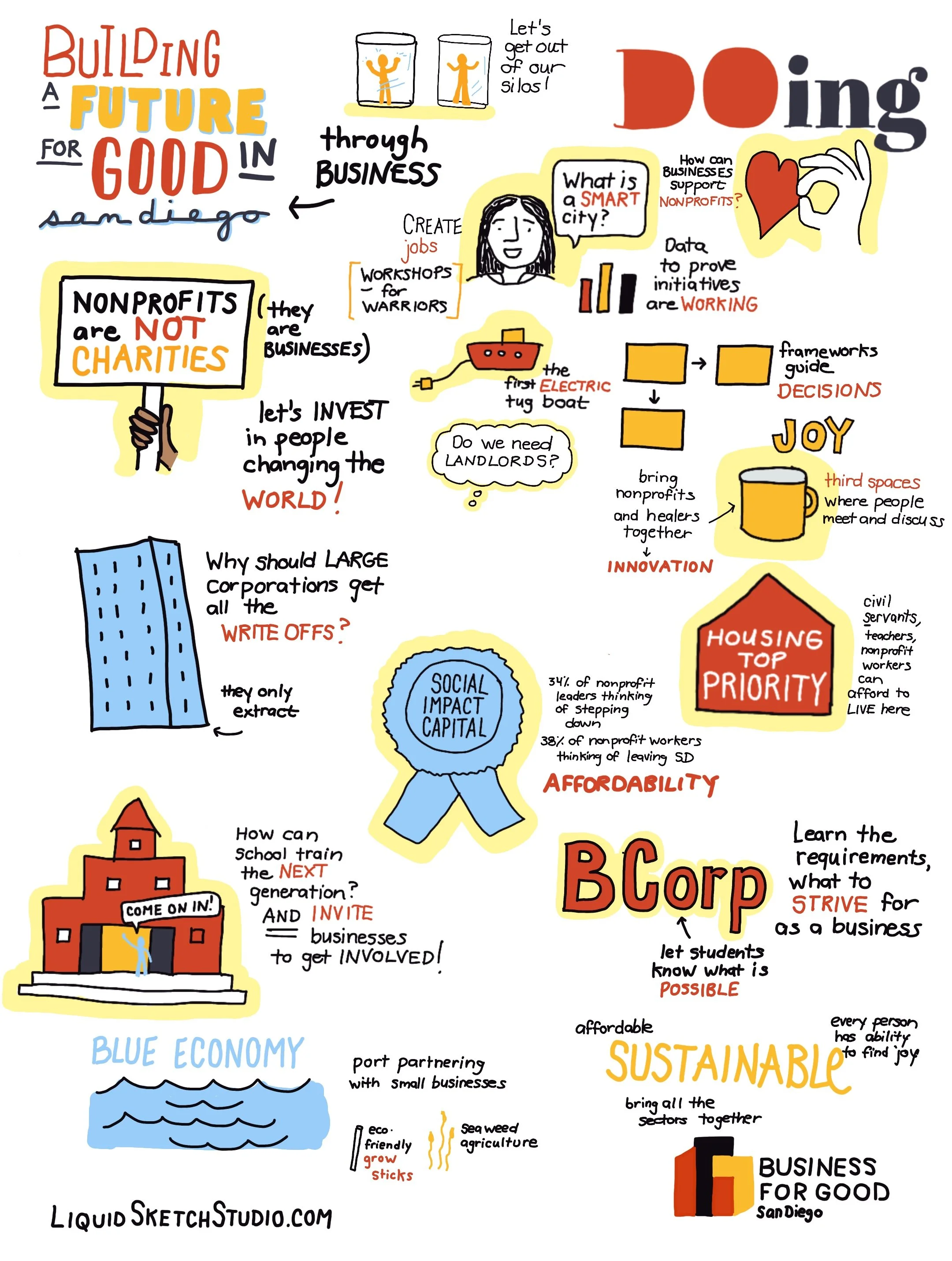
Nonprofits Are Businesses
One of the most refreshing truths shared during the summit was this:
Nonprofits are not charities. They are businesses.
They may have a social mission, but they still require sustainable revenue models, strong leadership, and thoughtful operations. Without those structures, they remain dependent on donations rather than building long-term impact. Mission matters. But structure sustains the mission.
Making Your Minute Count: Public Commenting
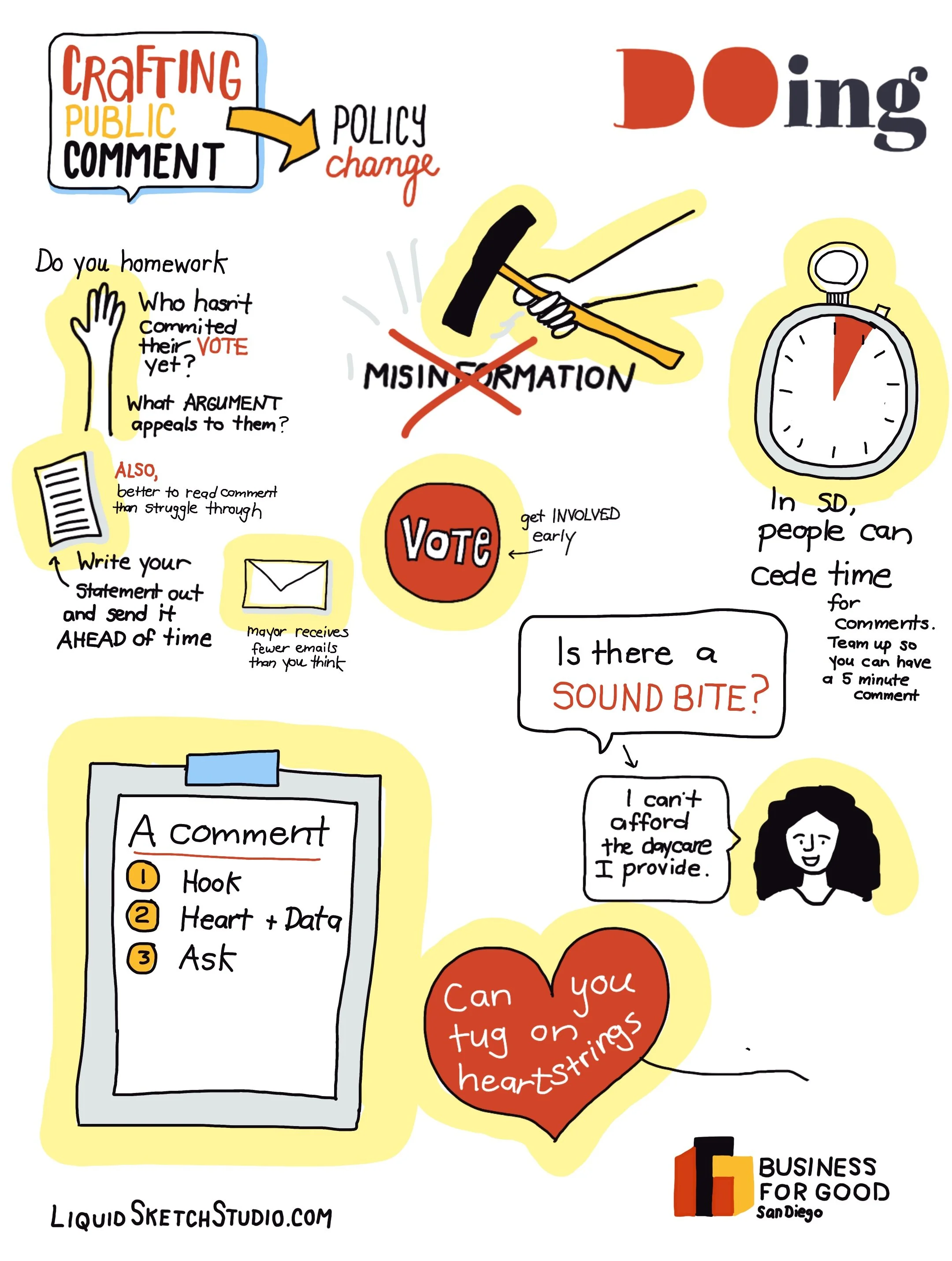
Another topic that came up was civic engagement—specifically the art of making a public comment at a city council or school board meeting. You often only get one minute. Which means strategy matters.
A strong public comment tends to follow a simple structure:
Start with a hook – something that captures attention immediately.
Create an emotional connection – why this issue matters to people.
Support with data – facts that give credibility.
End with a specific ask – what action you want taken.
It also helps to research who you’re speaking to. What issues matter to them? What pressures are they navigating?
In other words, even civic participation benefits from thoughtful design.
The B Corp Movement
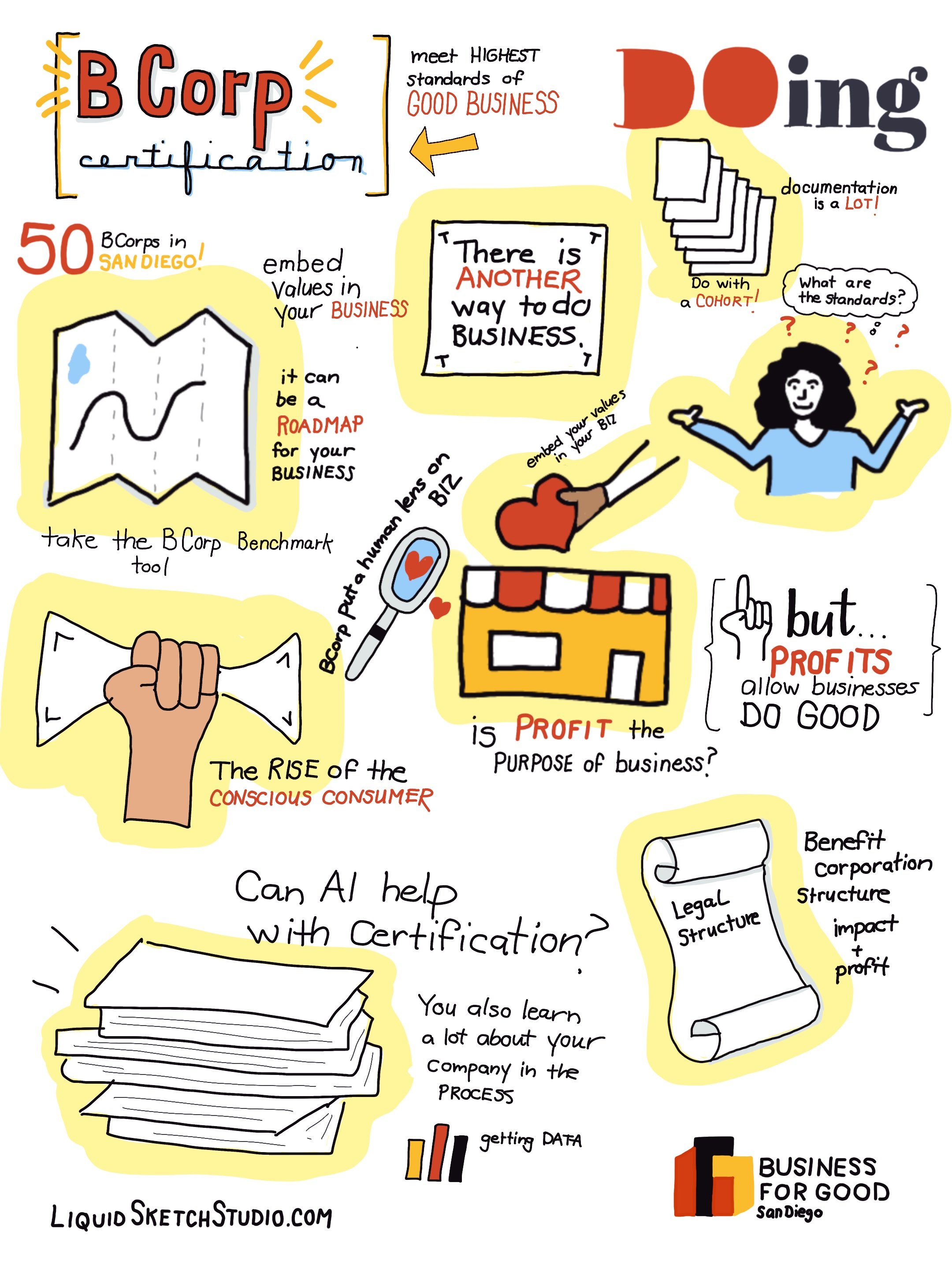
The conversation also touched on B Corp certification, a global movement recognizing companies that meet high standards of social and environmental responsibility.
There are roughly 10,000 B Corps worldwide, and about 50 of them are based here in San Diego.
Becoming a B Corp isn’t just a badge. It often requires companies to rethink aspects of their business model—from governance to supply chains to community impact.
Again, it comes back to design.
Business for Good Is Architecture
One of the most powerful moments of the summit came from Paula A. Cordeiro, Dammeyer Distinguished Professor of Global Leadership and Education at the University of San Diego.
Her message was clear:
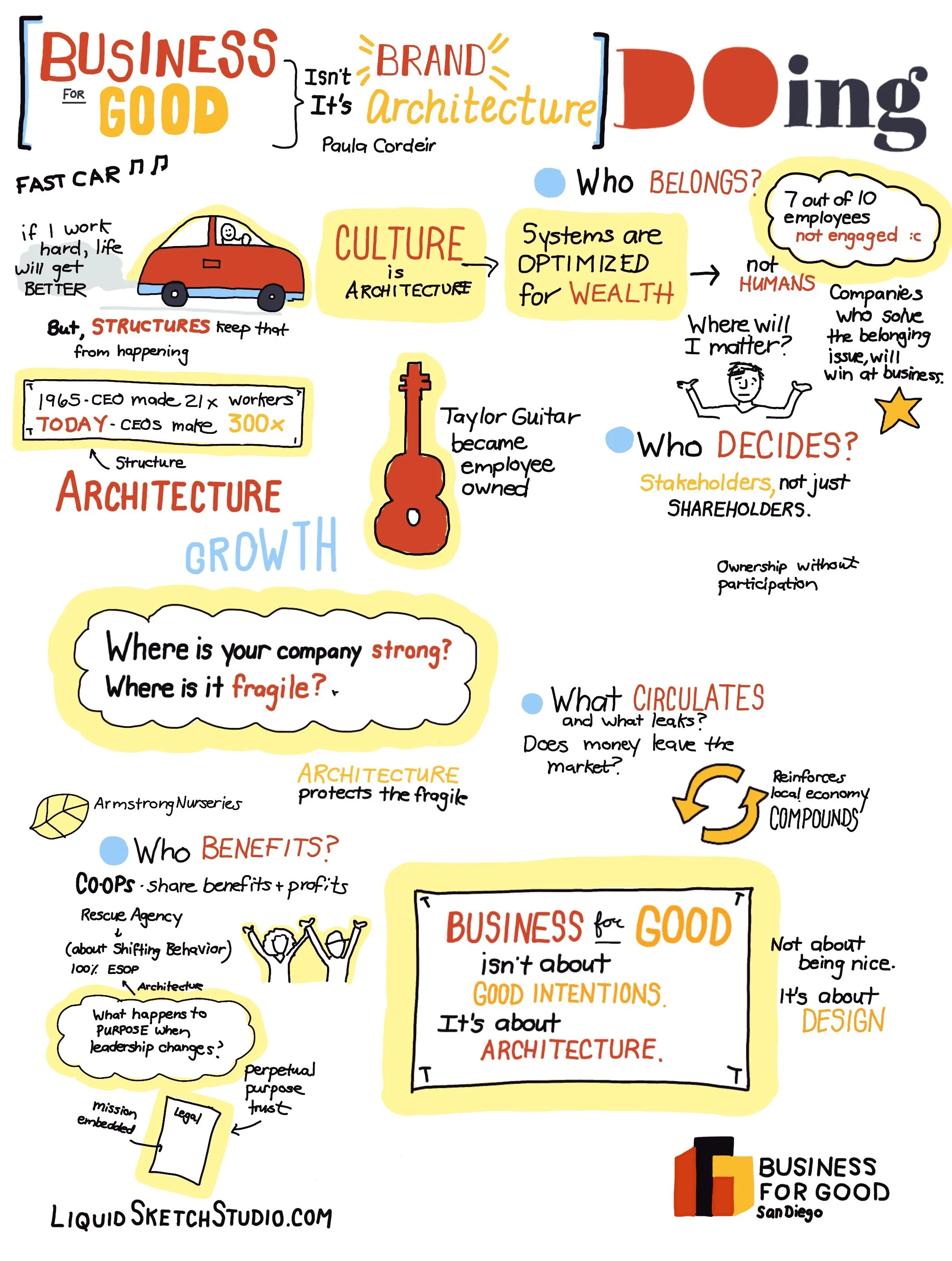
“Business for good isn’t about good intentions. It’s about architecture.”
In other words, positive impact doesn’t come from a clever mission statement or a well-written brand promise.
It comes from how a business is built.
According to Cordeiro, true “Business for Good” organizations design their structures to create long-term value for people, communities, and the planet. Social impact isn’t layered on later—it’s embedded into the foundation.
Design Matters
As someone who spends her days helping organizations visualize strategy and clarify complex conversations, this idea resonated deeply. Whether we’re talking about business models, civic engagement, or company culture, one truth keeps surfacing:
Clarity and impact rarely happen by accident.
They happen by design.