

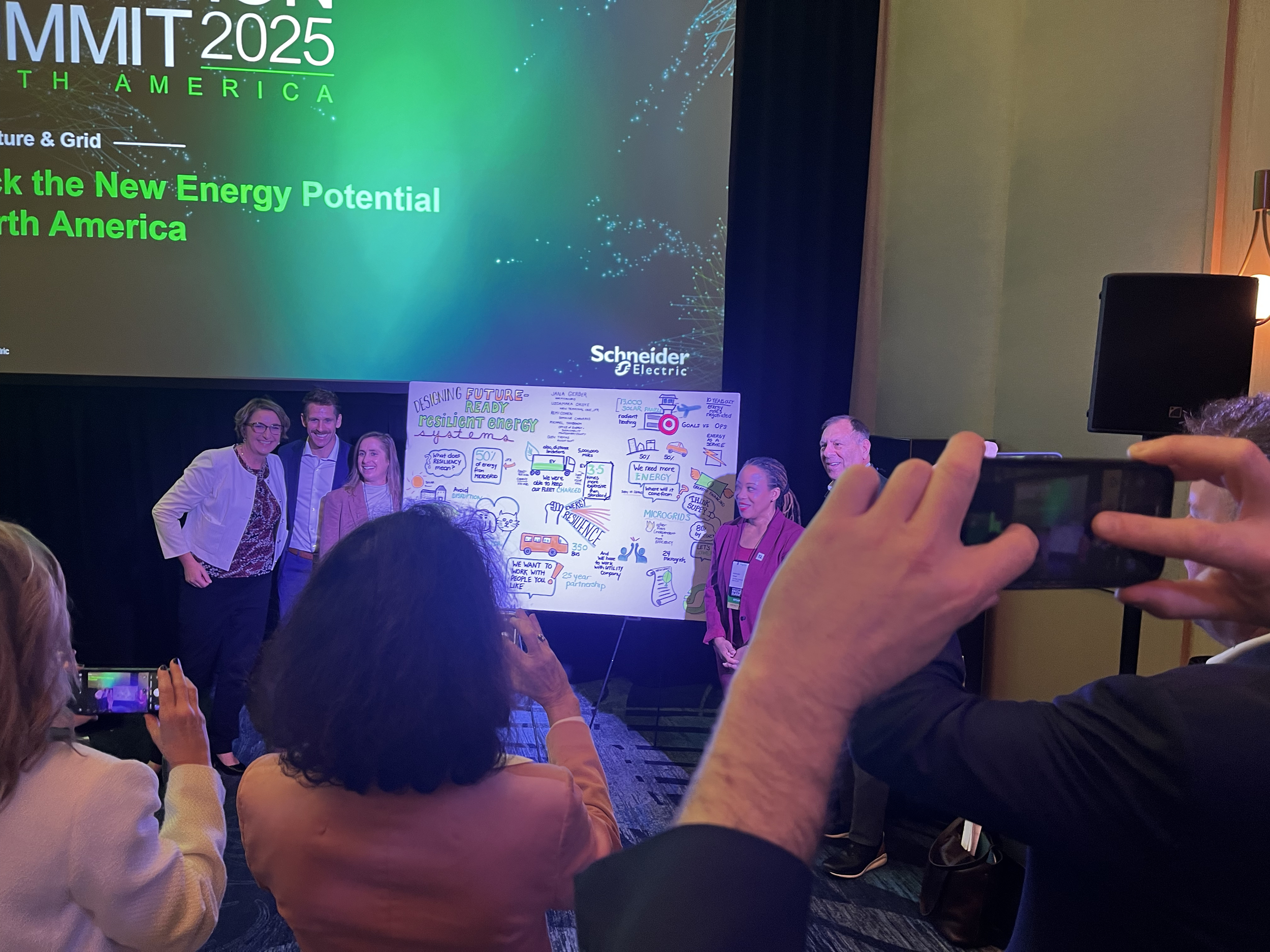
Think back to the best conferences you’ve been to. What do you remember? The great parties. (Yikes on the internet there is a video of me singing Surfing U.S.A. by the Beach Boys.) The setting. But do you really remember the sessions?
As a meeting planner, your real job isn’t just to deliver content. It’s to turn moments into meaning. To make sure people leave not just inspired but transformed. That’s where graphic recording comes in.
You’re Not Just Planning an Event. You’re Designing Memory.
Instead of relying solely on slides and spoken words, you’re layering in a real-time visual system that helps attendees follow, process, and organize ideas as they happen.
You’re adding infrastructure for understanding.
Your Attendees Need More Than Audio
Here’s the gap most conferences ignore: When attendees are only listening, they’re using a single cognitive channel. That’s a lot of pressure on attention—and it’s easy to lose.
But when they can see ideas unfold while hearing them, something clicks.
Now they’re:
Listening to the speaker
Watching ideas take visual form
Connecting concepts spatially
Interpreting meaning through images and structure
That multi-sensory engagement is a performance upgrade for the brain. Even if someone isn’t looking directly at the speaker, following the graphic recording while listening can increase focus and comprehension. More of the brain is engaged, which means more of the content actually lands.
Engagement Isn’t a Gamble Anymore
You’ve seen it before—phones come out, attention drifts, energy dips.
Graphic recording gives the room a pulse by creating a live, evolving focal point that pulls attention back in. Attendees aren’t just passively consuming—they’re tracking, anticipating, and making sense of what’s being built in front of them.
Clarity Is a Competitive Advantage
Your attendees are processing a lot in a short amount of time. Graphic recording helps them cut through the noise. It organizes complex discussions into clear visual structures, highlights key ideas, and reveals connections across sessions.
Instead of leaving with fragmented notes, they leave with a coherent mental model.
That’s what makes your event feel valuable.
You Create a Shared Experience (Not Just a Schedule)
One of the hardest parts of event design is alignment—getting everyone to feel like they’re part of the same conversation.
Graphic recording makes thinking visible.
It captures collective insights in a way the whole room can see, react to, and remember. It reinforces key themes and creates a sense of shared momentum.
Your Event Doesn’t End When It Ends
You’re always thinking about post-event value.
Graphic recordings give you a powerful asset: something visual, shareable, and immediately useful.
Attendees revisit it. Teams discuss it. Speakers reference it. Marketing repurposes it.
Instead of content fading out, it keeps working.
The Real ROI: What Sticks
At the end of the day, your success isn’t measured by how full the room was.
It’s measured by what people take with them.
If you want to find out the big picture about how graphic recording can make your event unforgettable, contact us at LiquidSketchStudio.